
Frequently asked questions
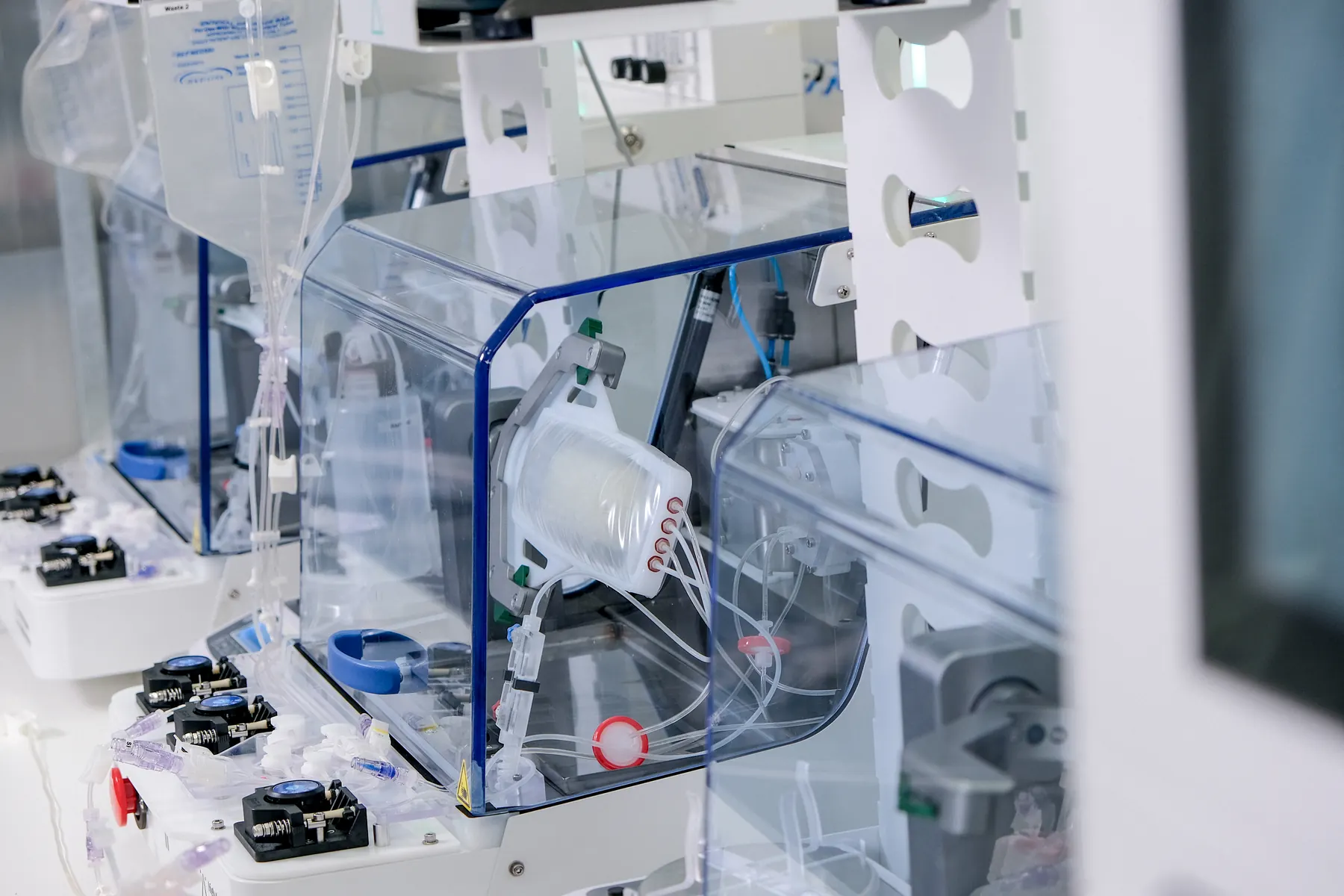
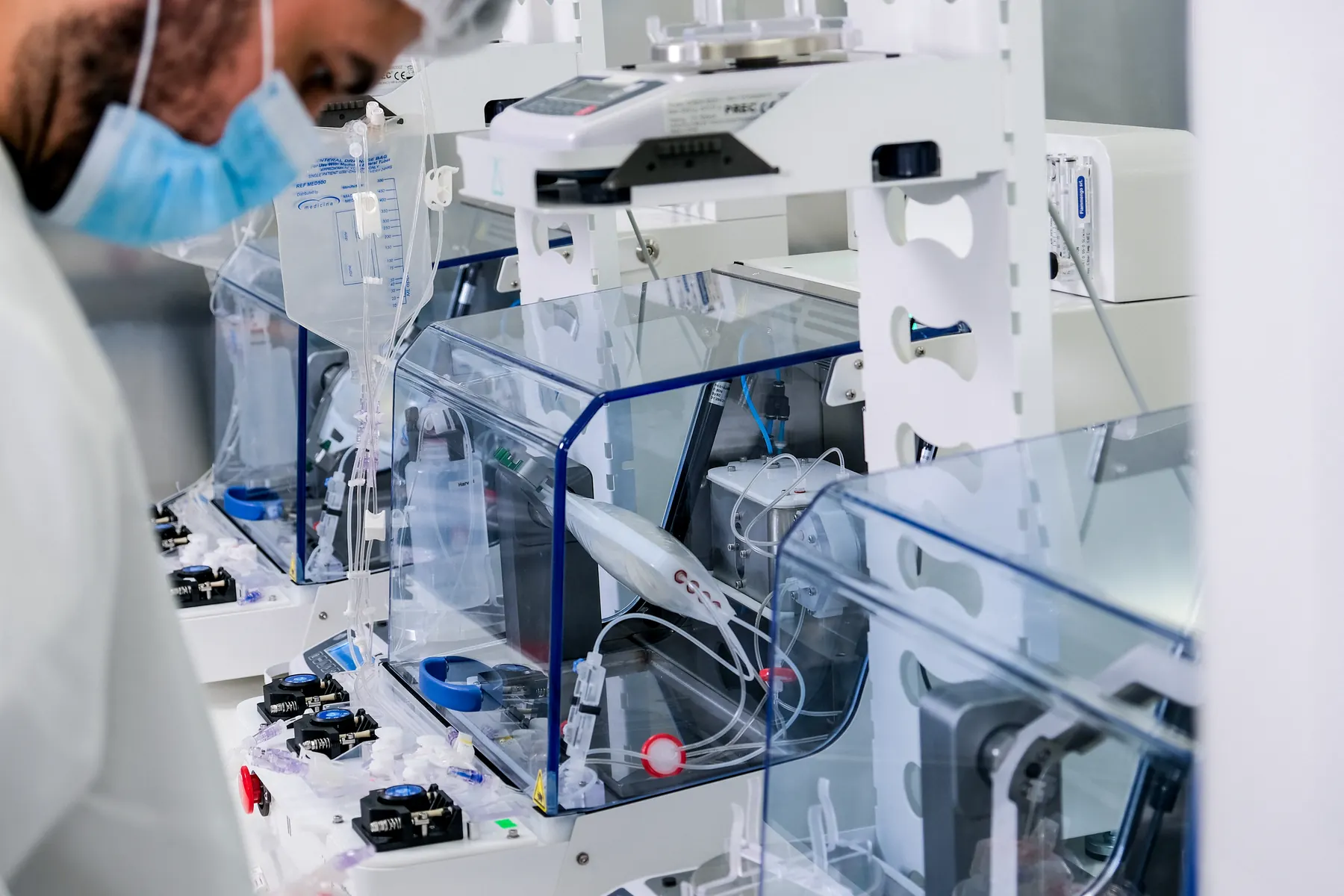
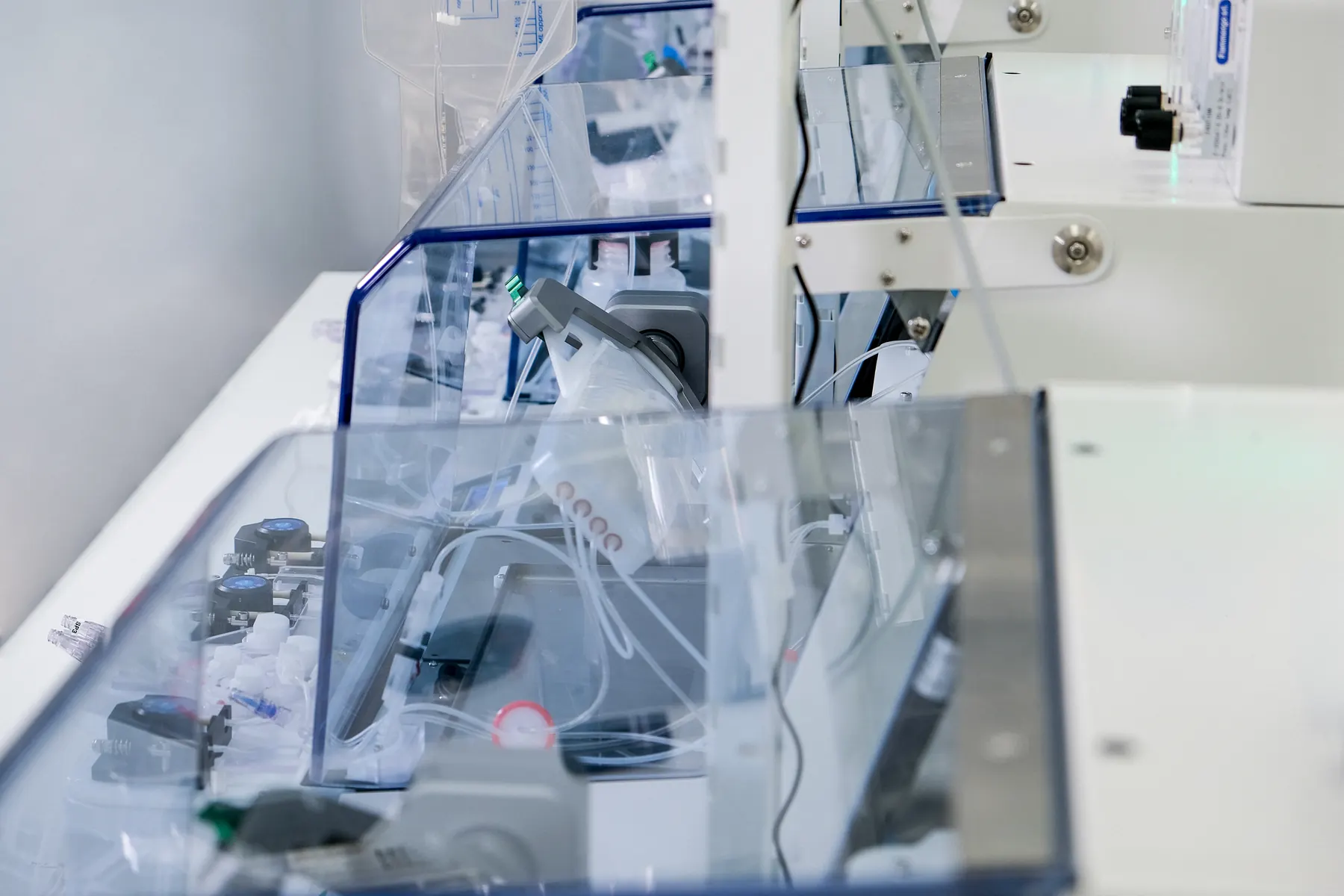
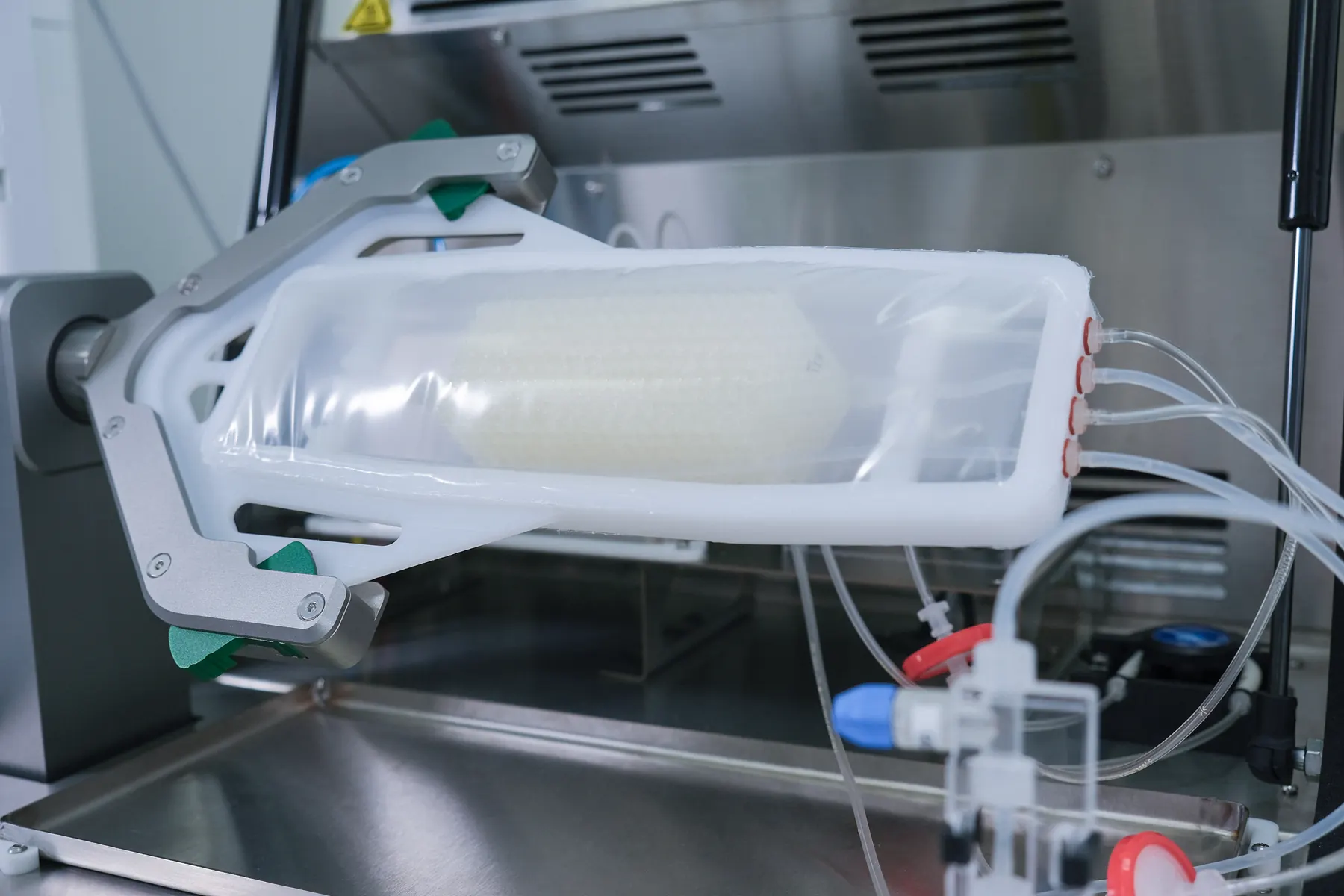
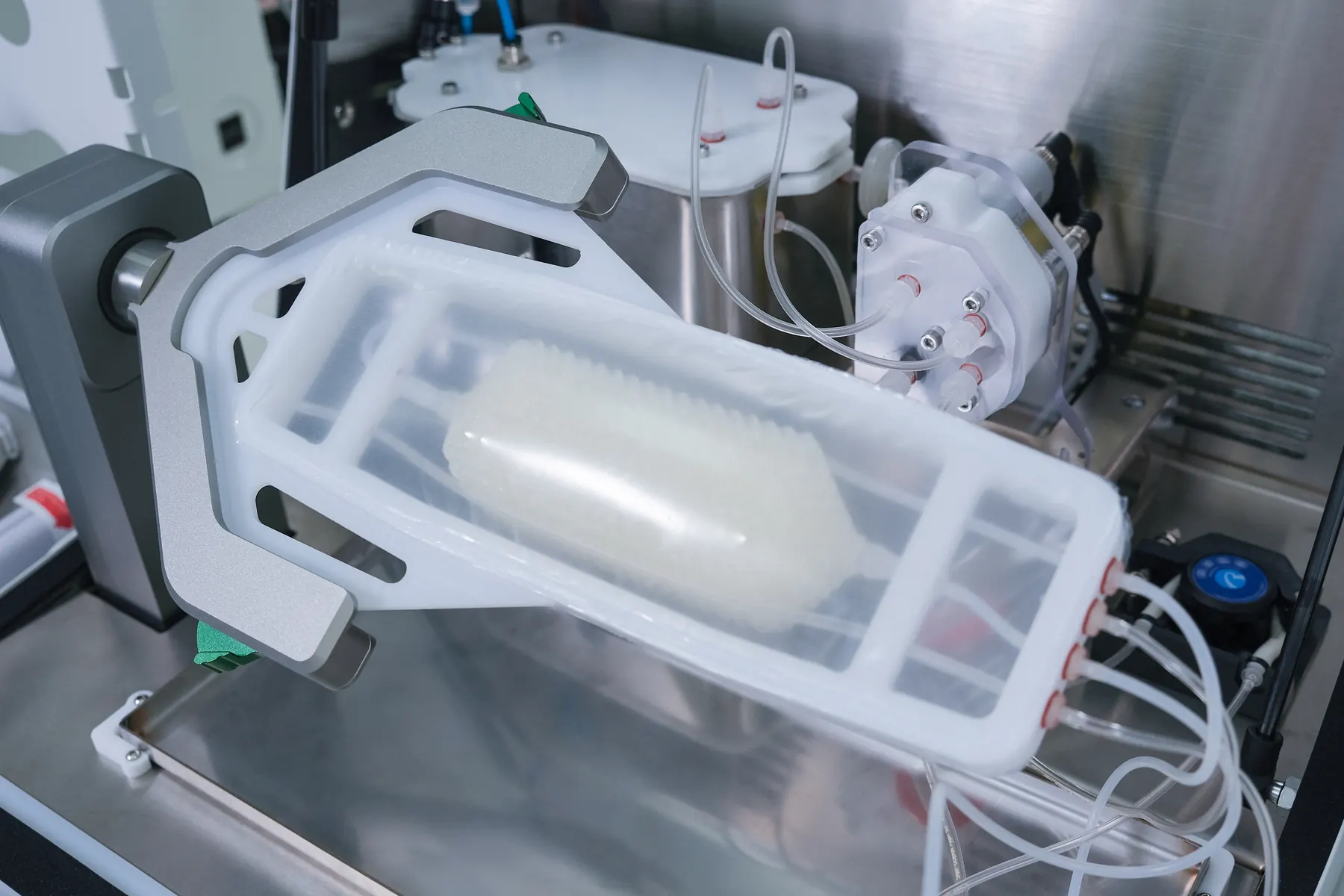
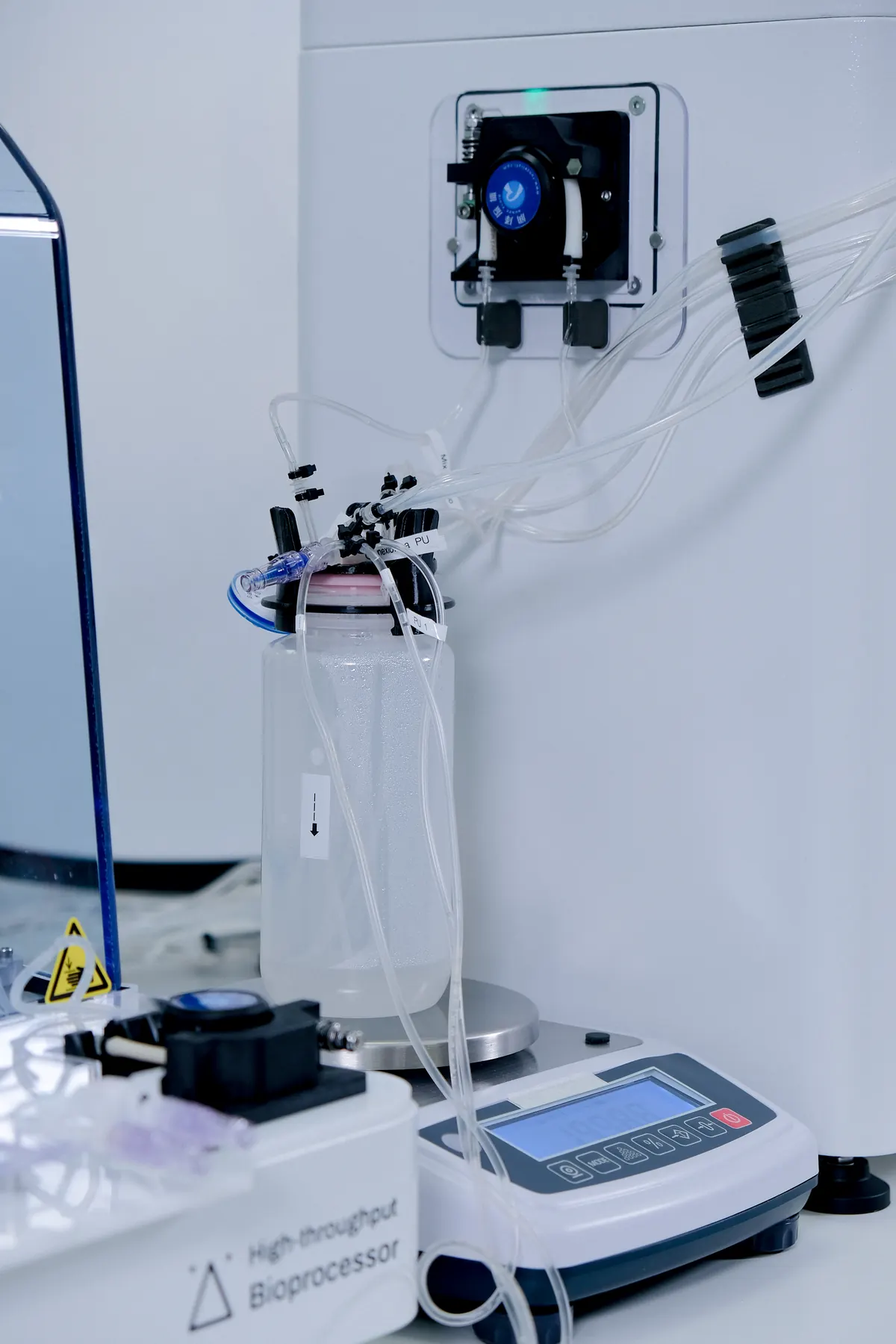
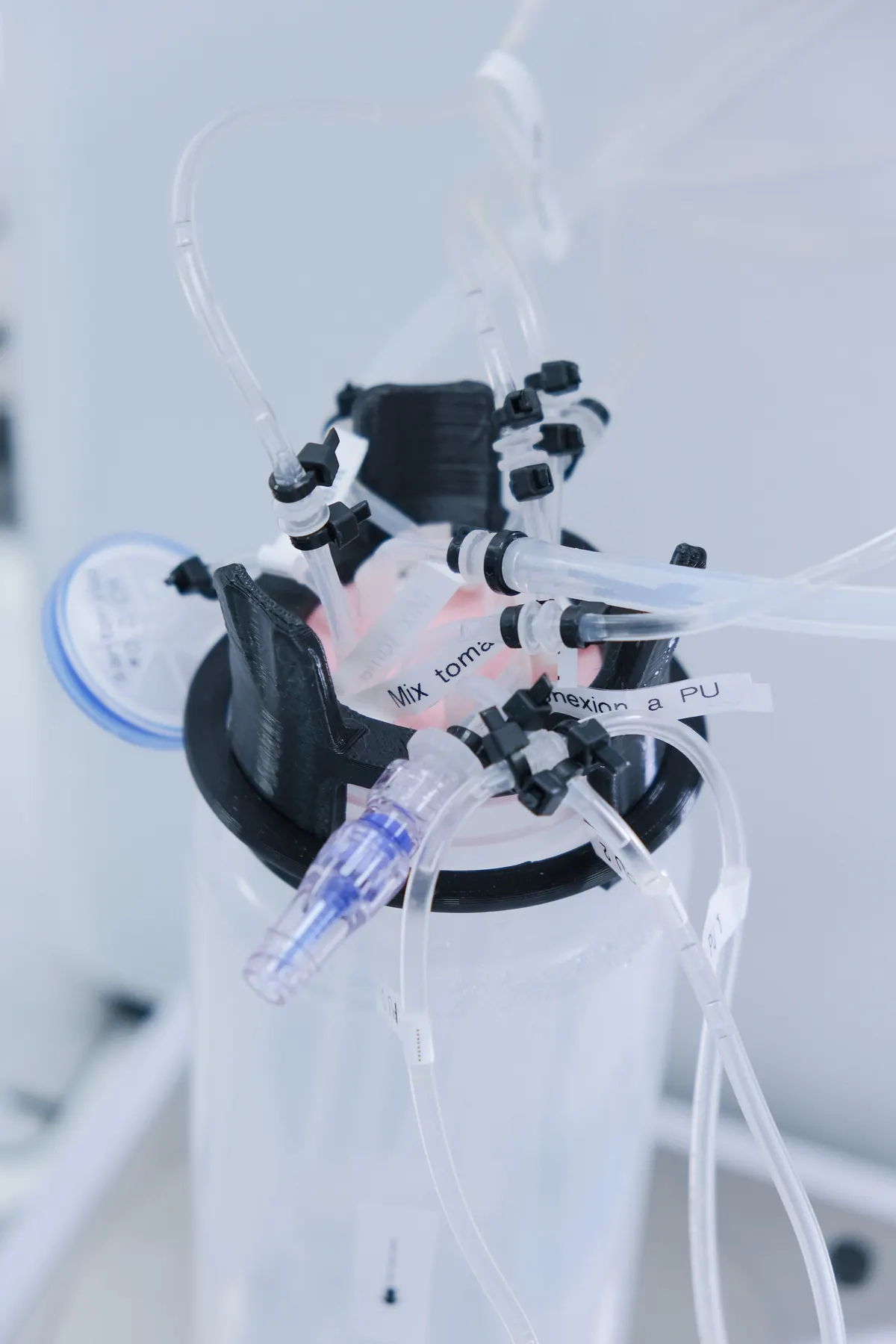
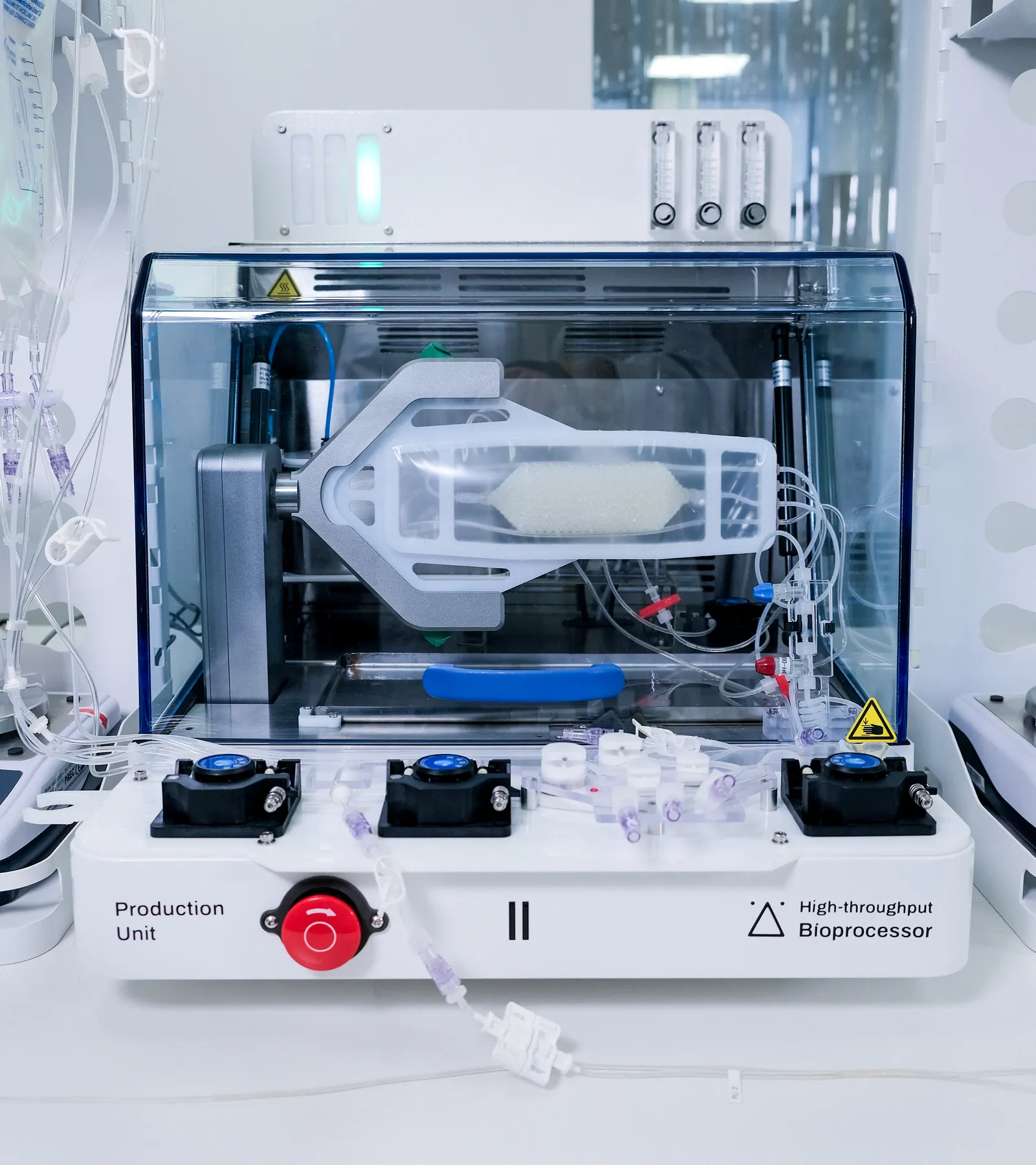
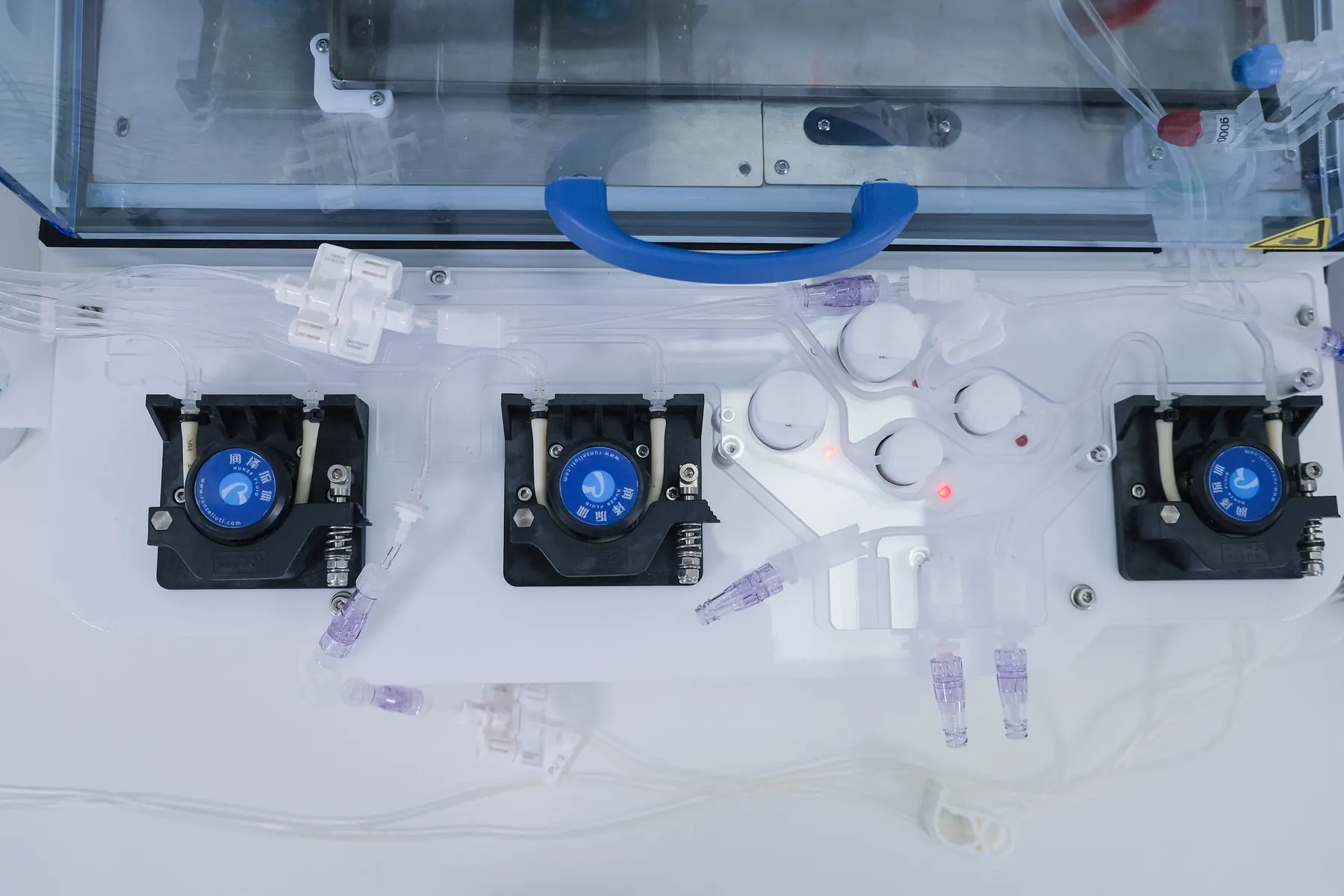
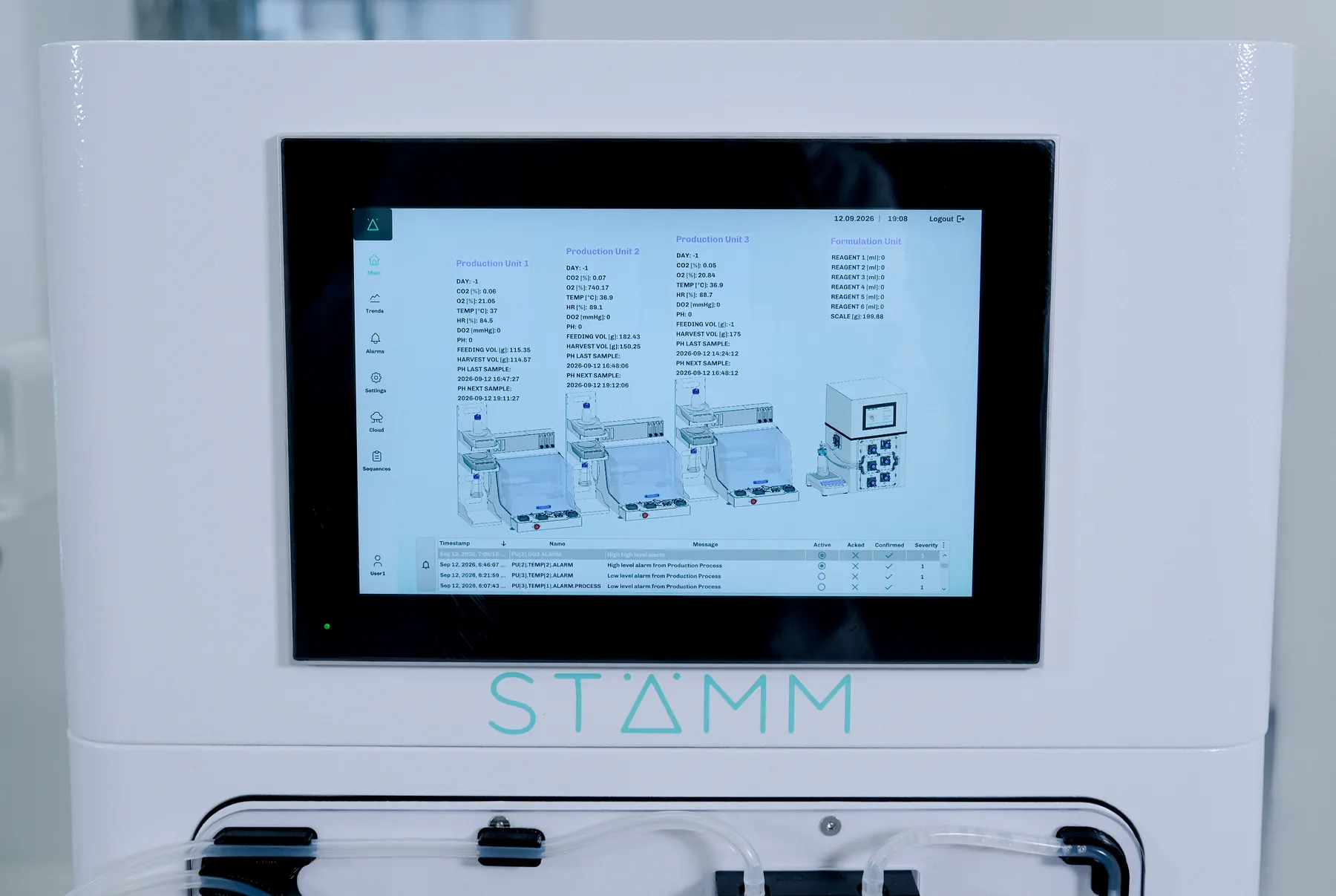
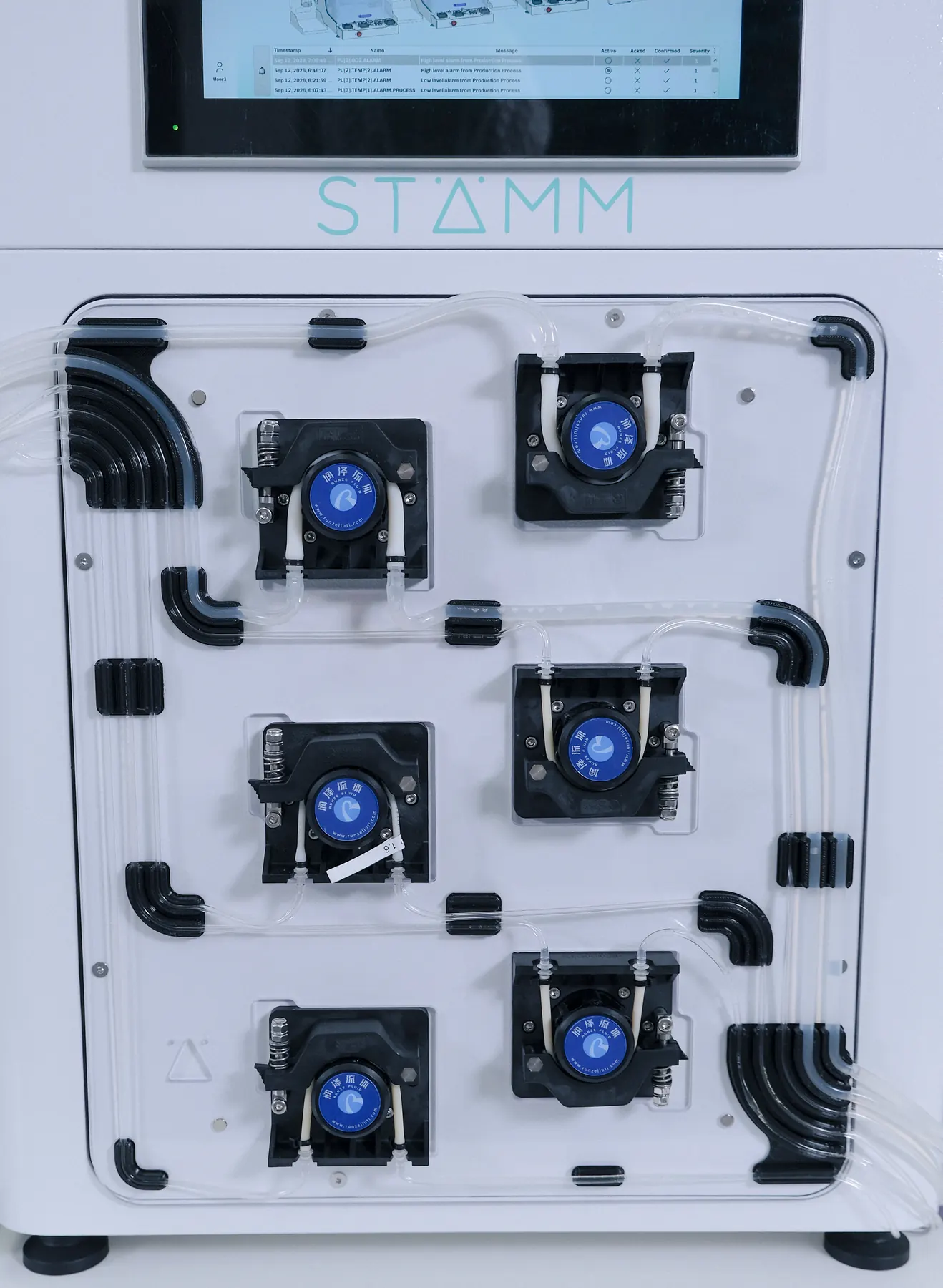
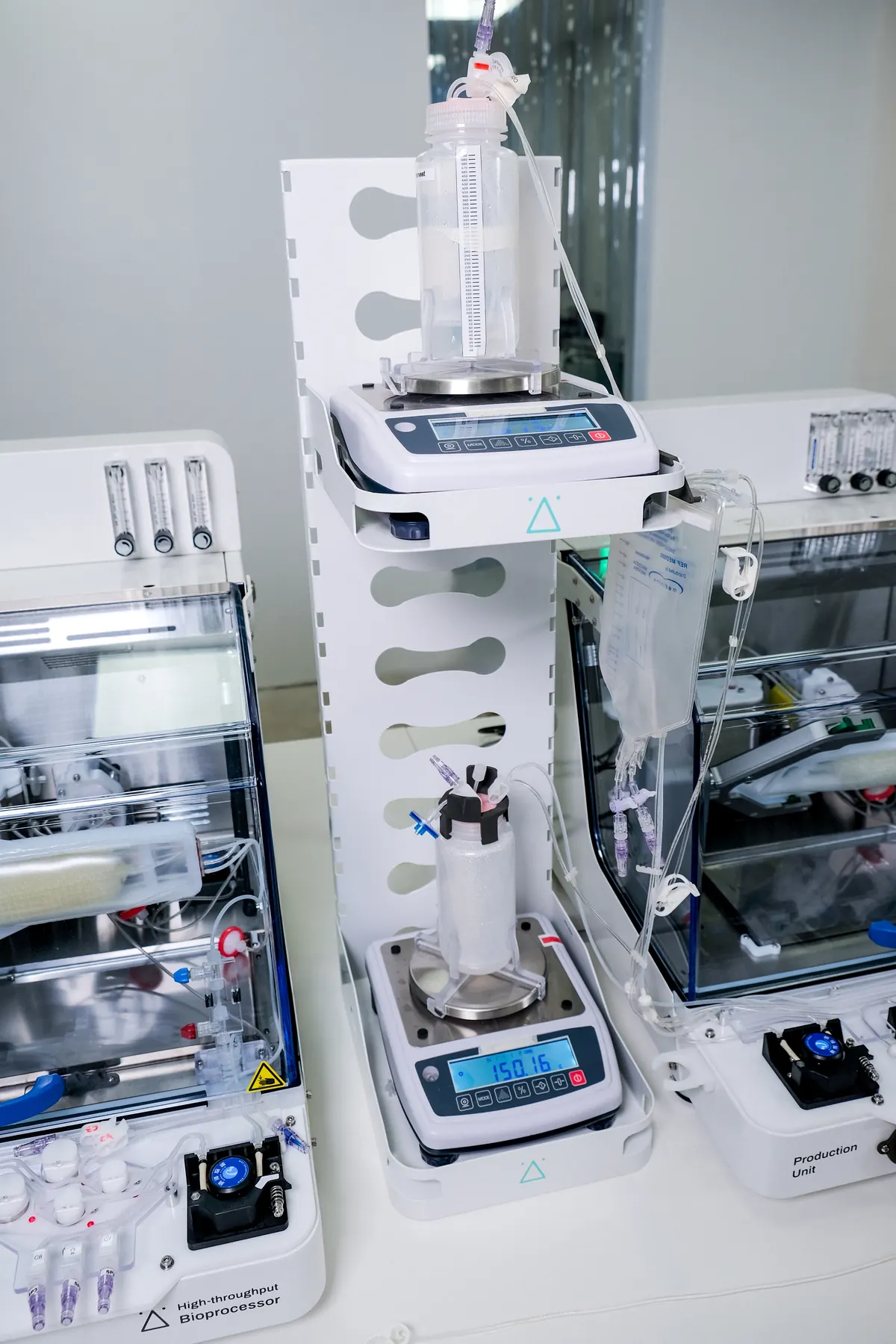
What is the Stämm High-Throughput Bioprocessor?
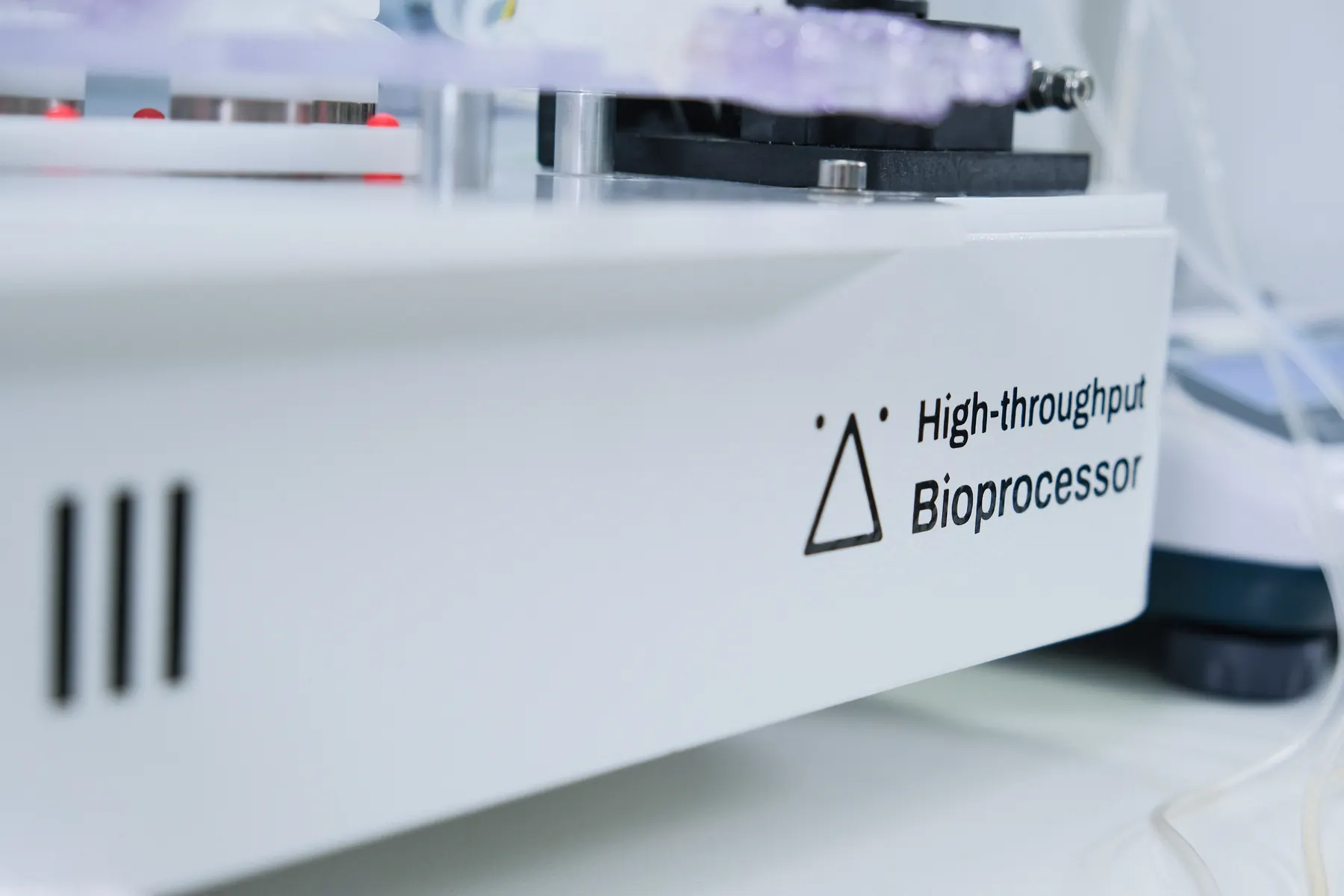
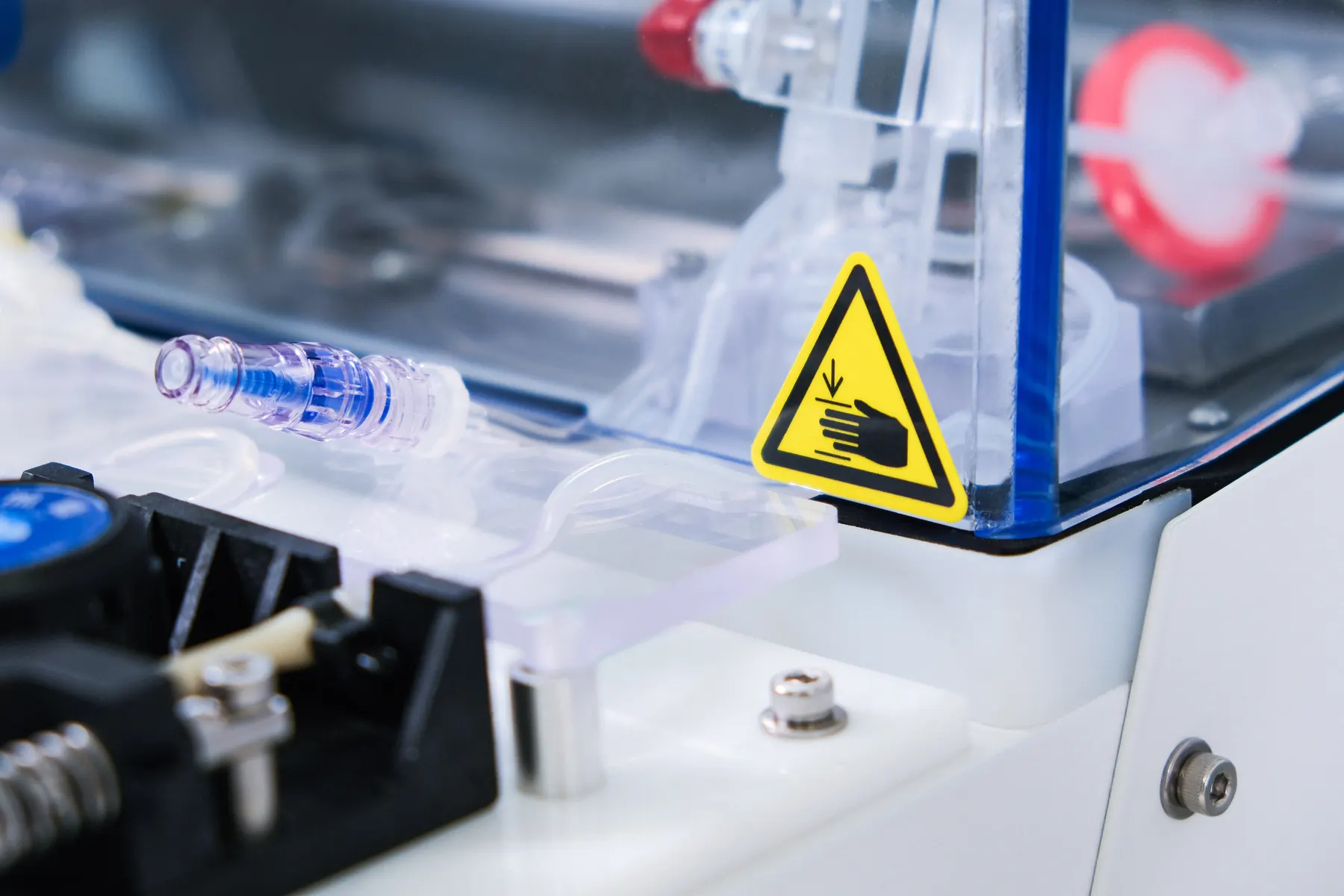
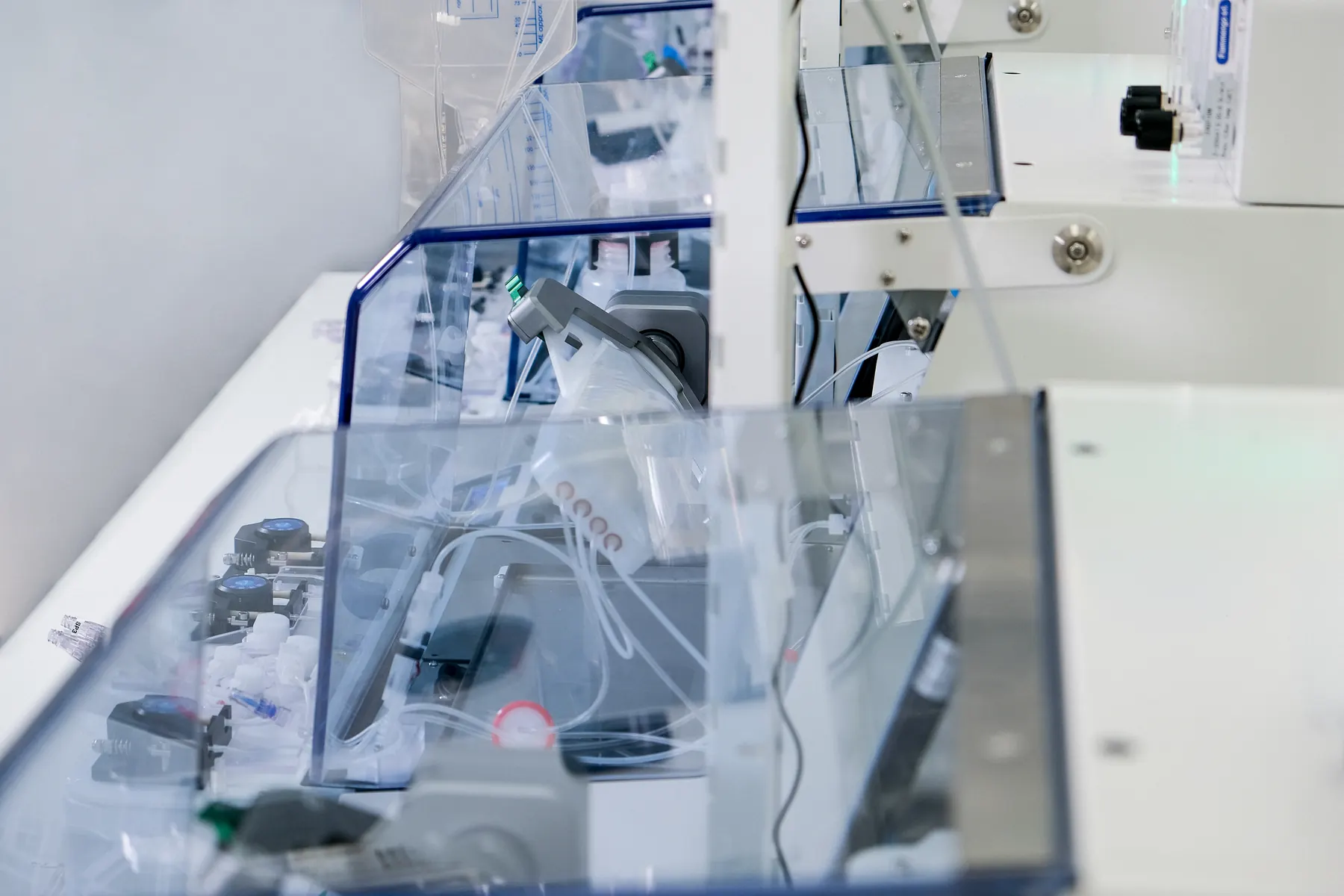
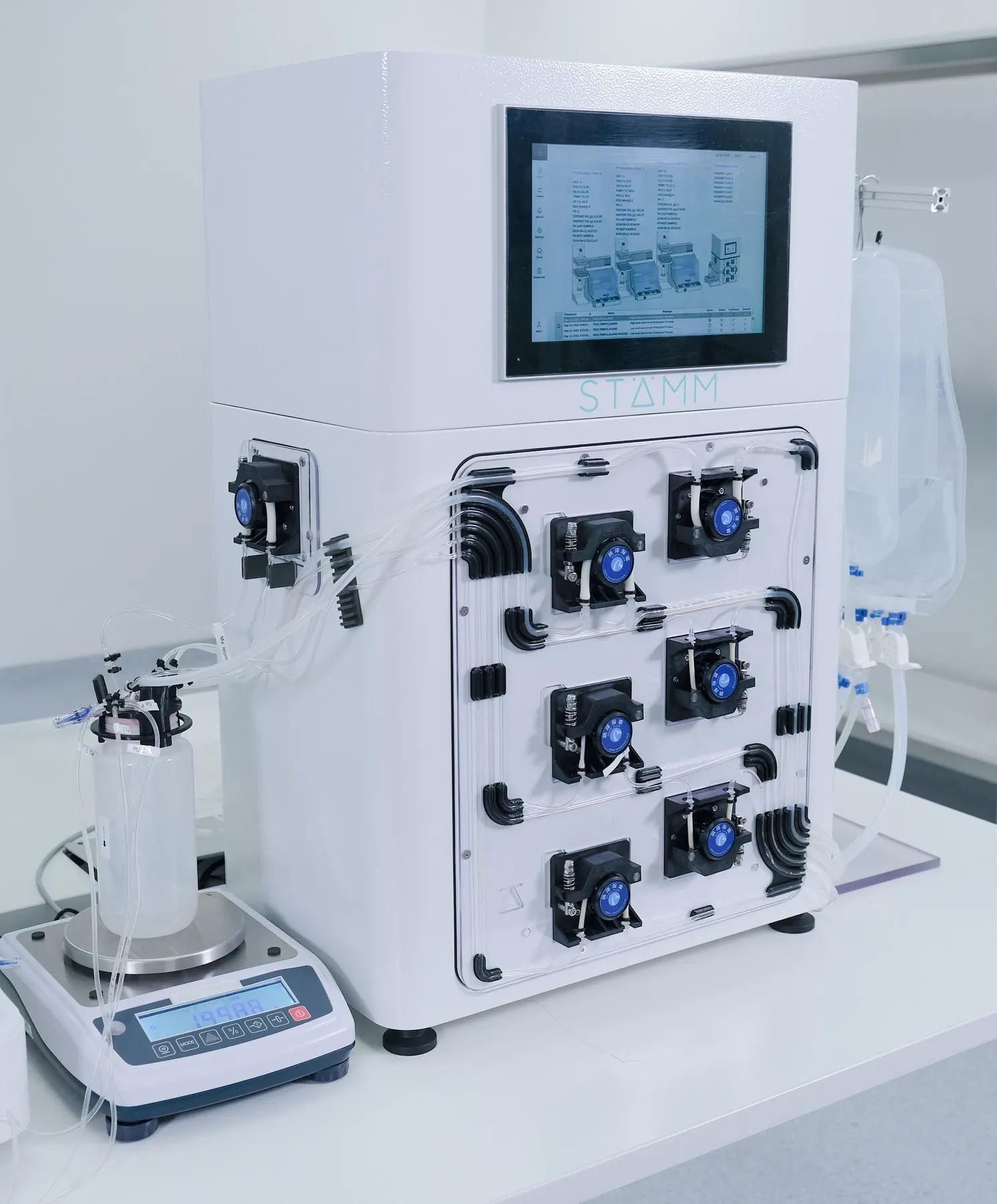
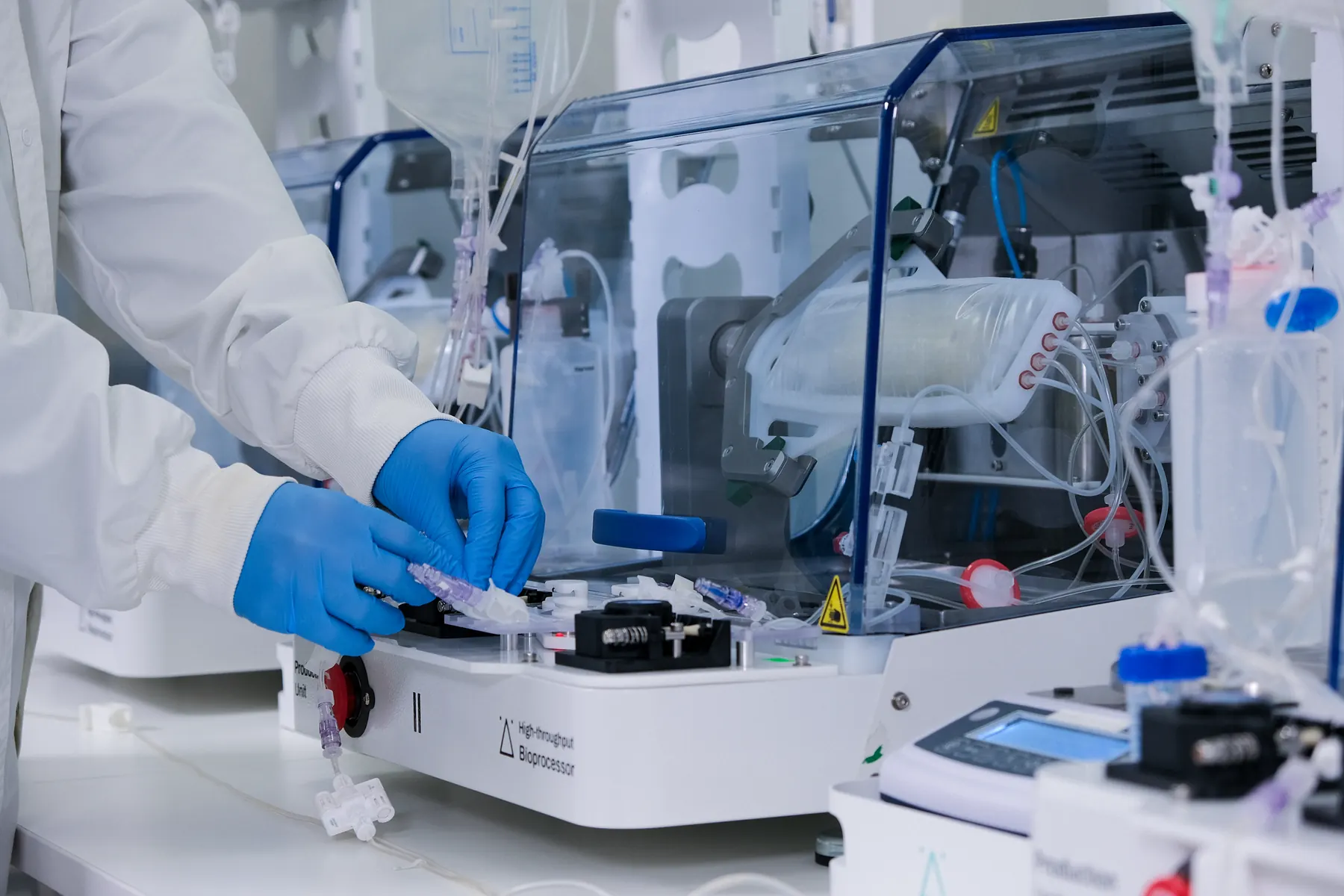
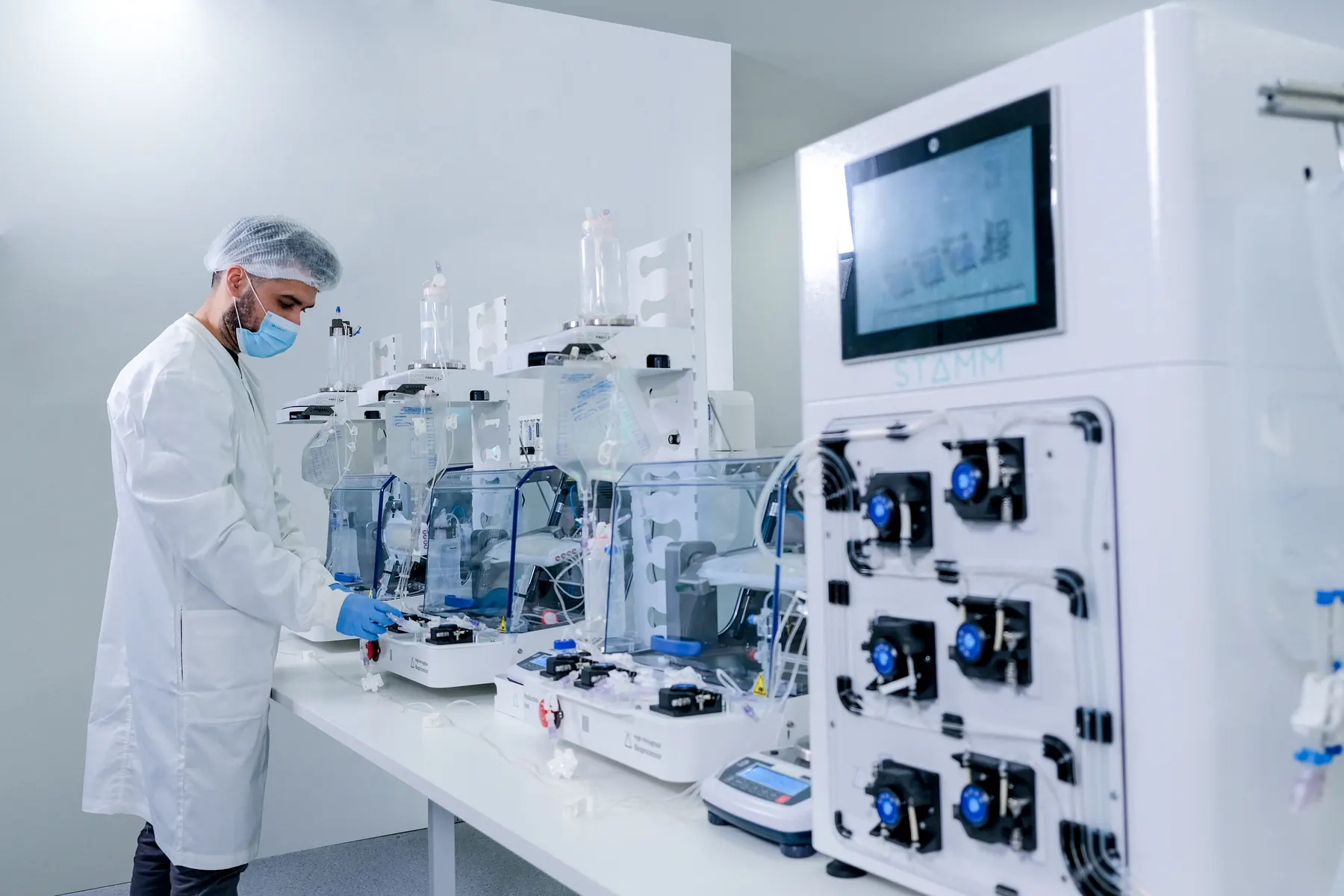
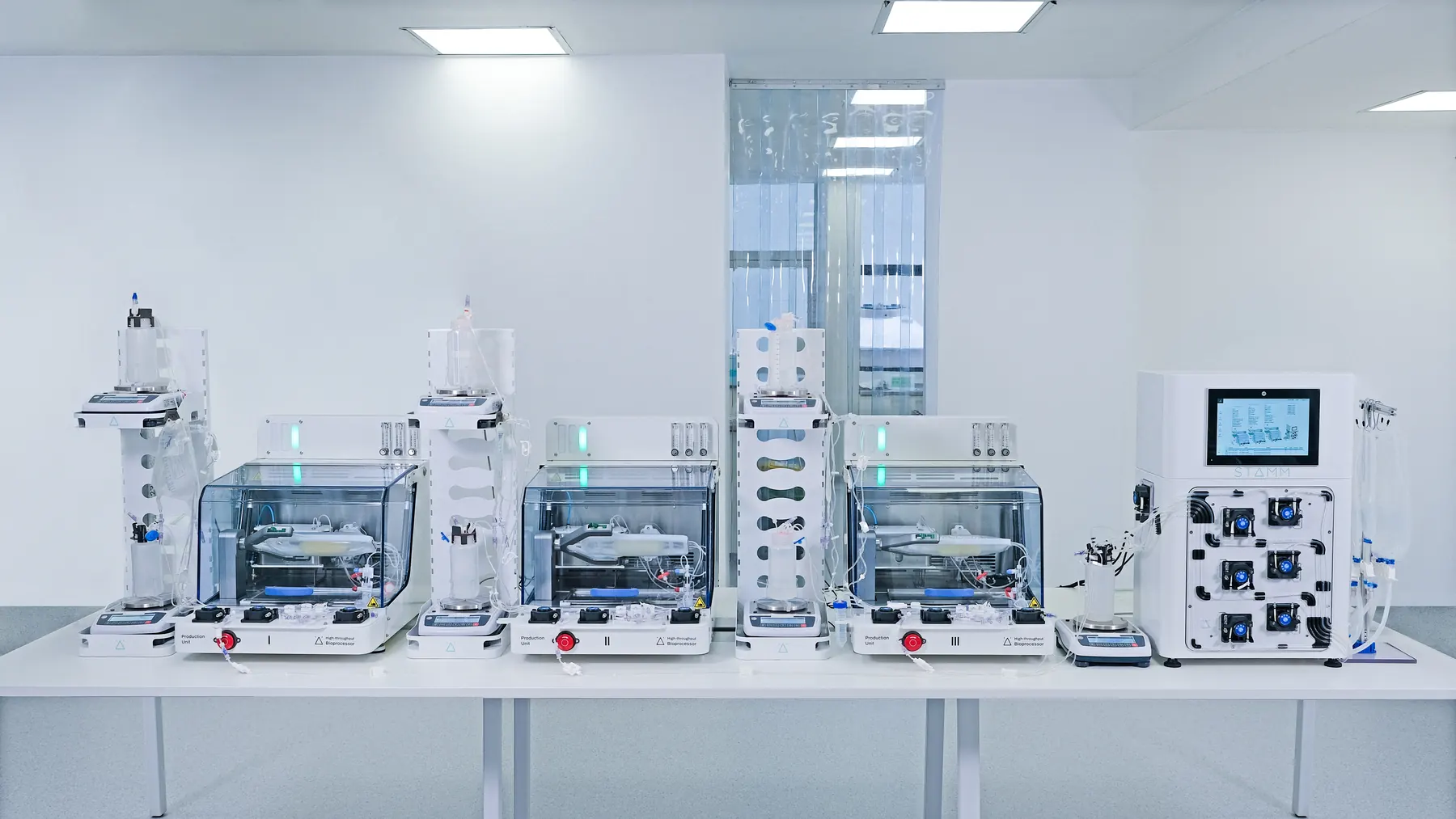
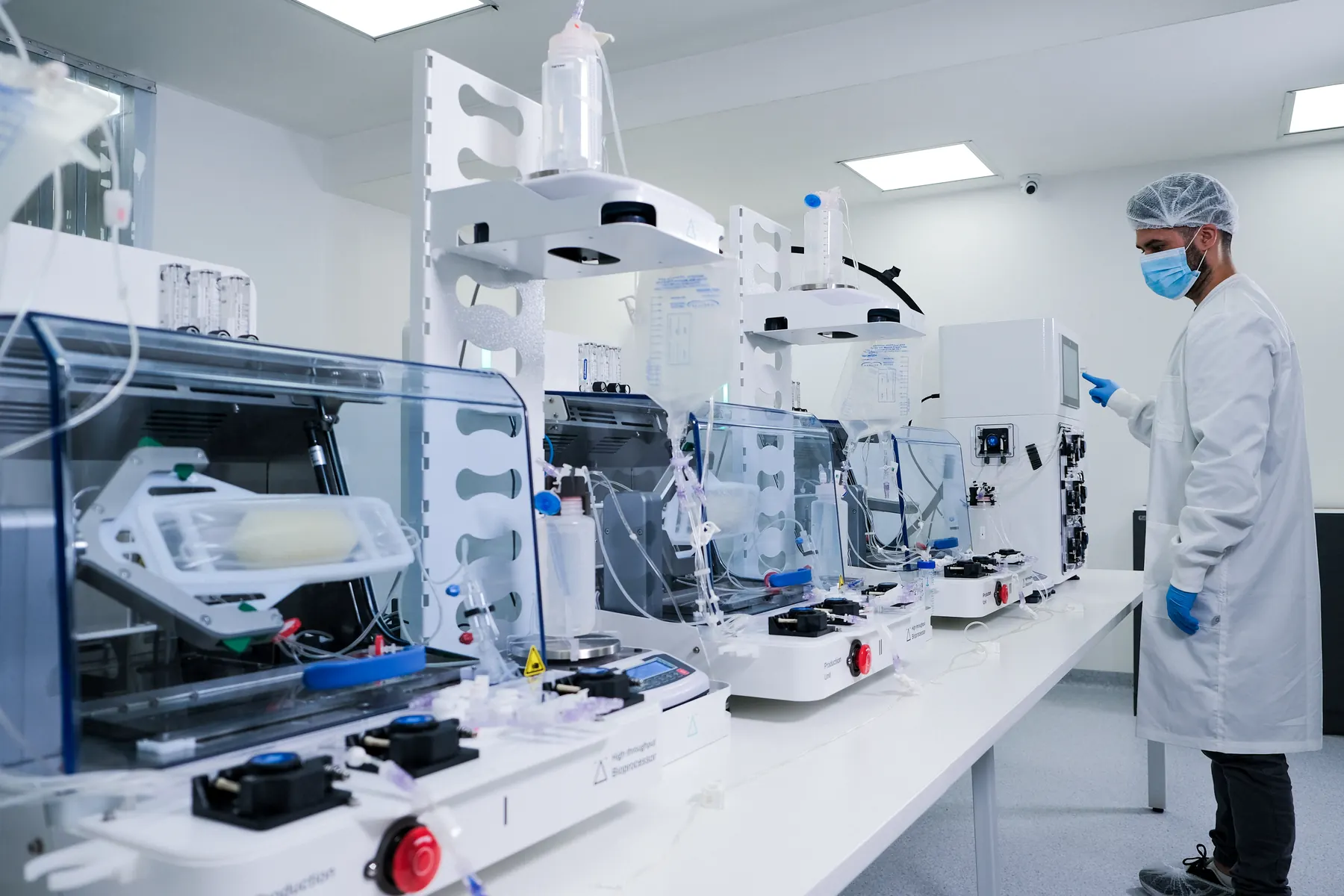
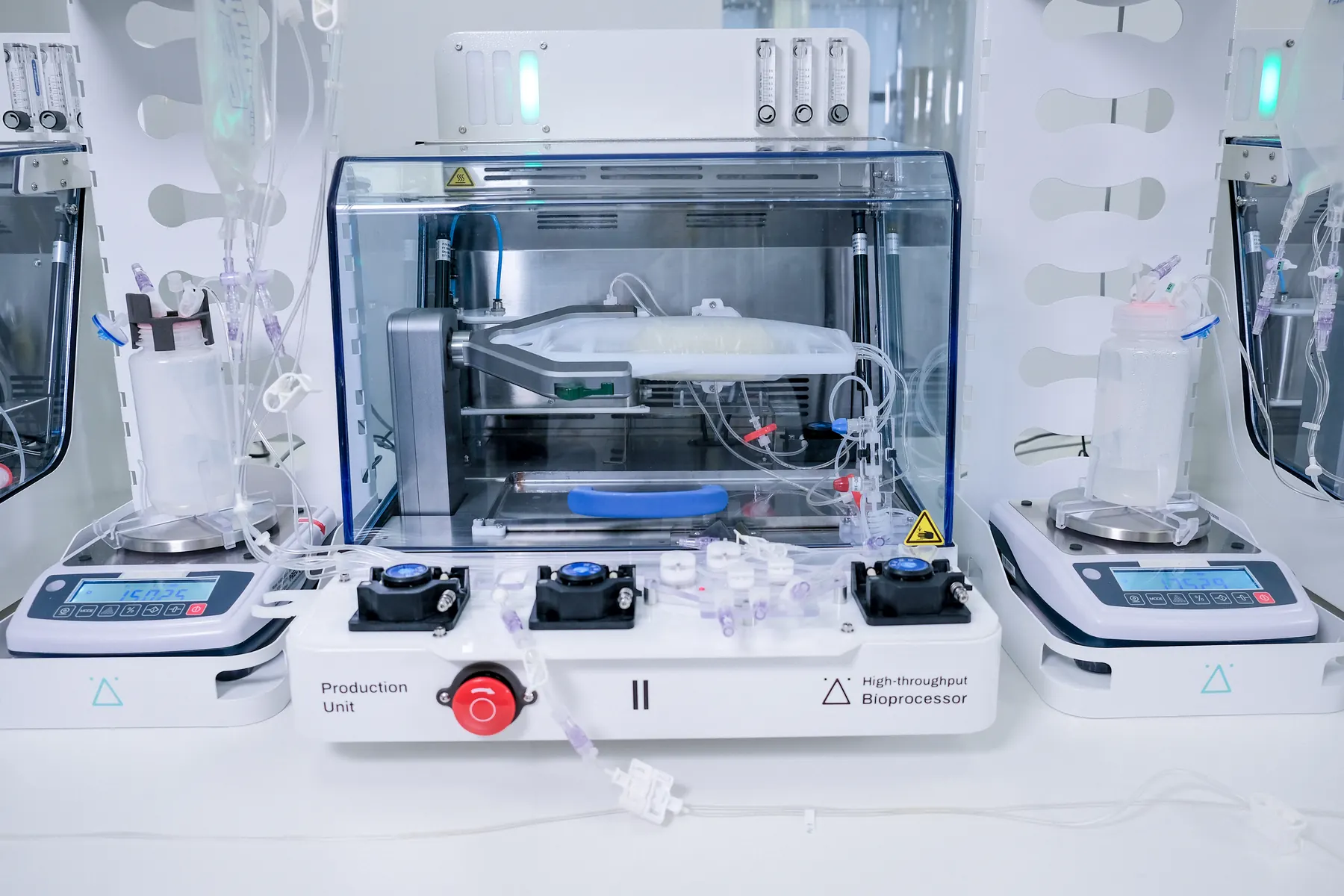
The HTB is a bench-top platform that runs up to three independent, continuous bioprocesses in parallel without impellers or spargers, using single-use cartridges for adherent or suspension cells. It is intended for Research Use Only.
Why avoid impellers and spargers in cell culture?
Impellers and spargers introduce shear stress and bubble-rupture damage that harm cells. The HTB replaces both with diffusion-based gas exchange and continuous laminar flow instead of compensating for the damage with antifoam or shear protectants.
Does the HTB work for both suspension and adherent cells?
Yes. A single HTB runs both, using the matching cartridge for each. Both workflows benefit in the same way: automated operation, laminar flow instead of stirring, ultra-low shear stress, no bubbles, lower working volumes, and automated formulation and harvesting.
What is the BFB?
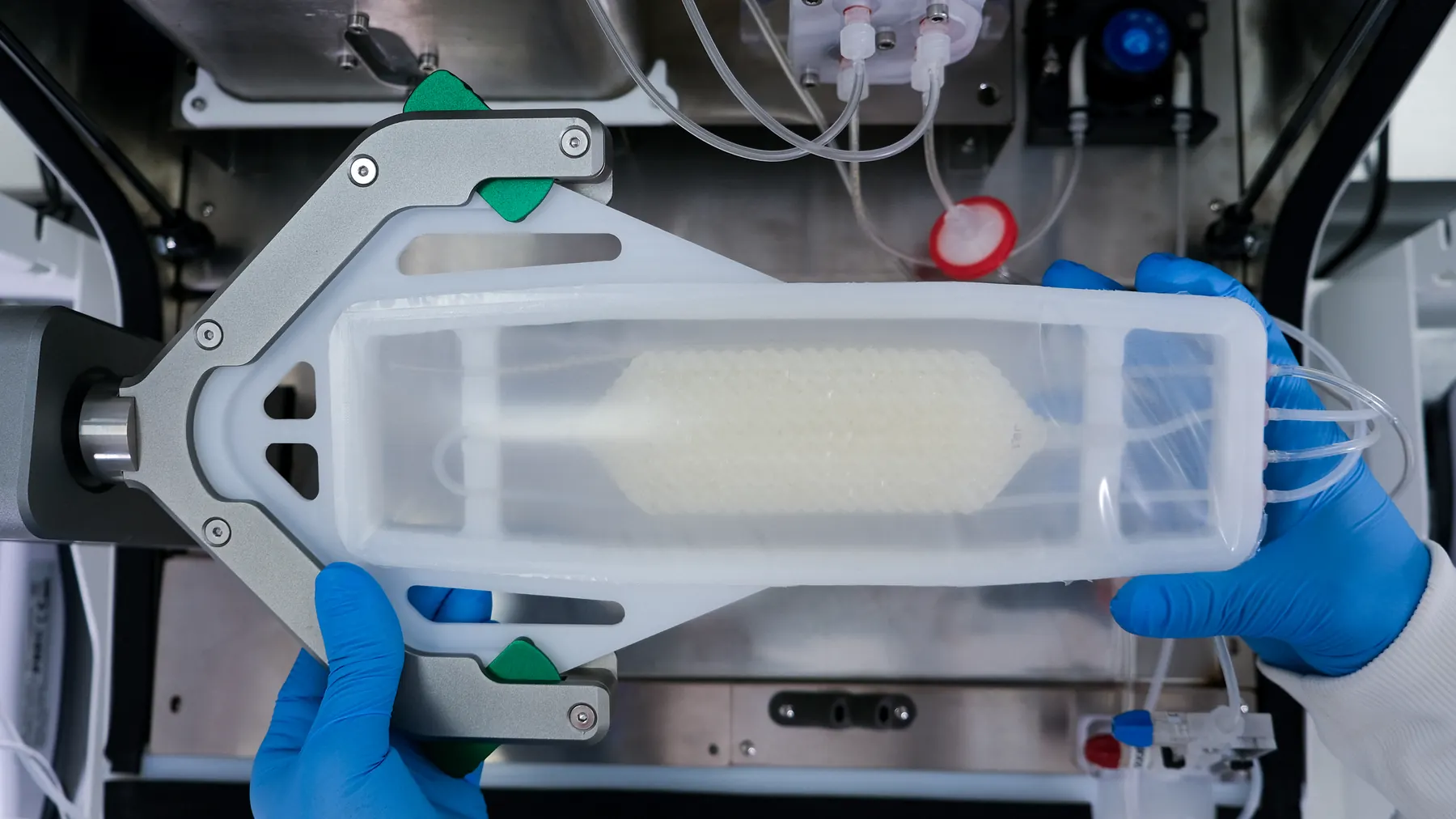
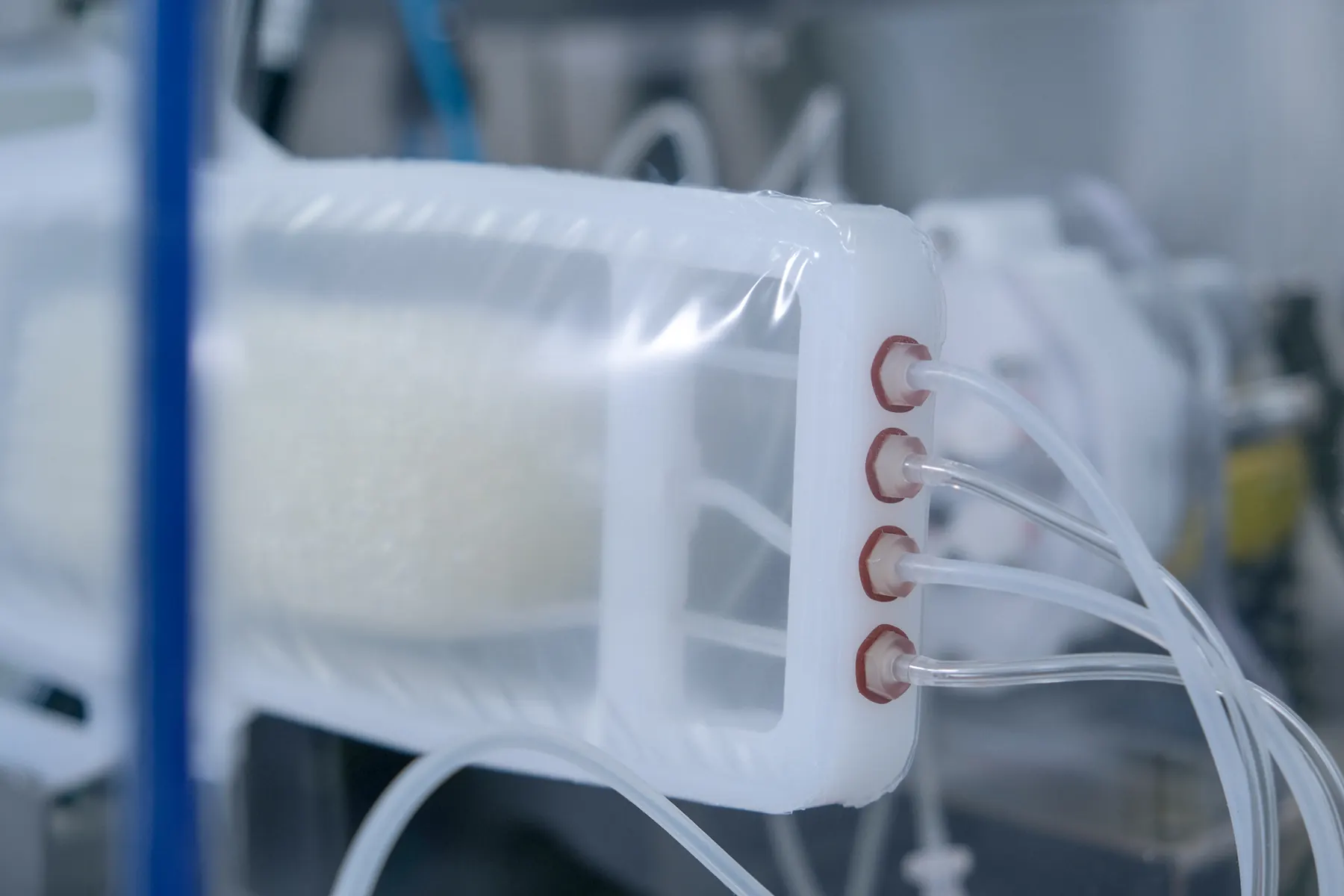
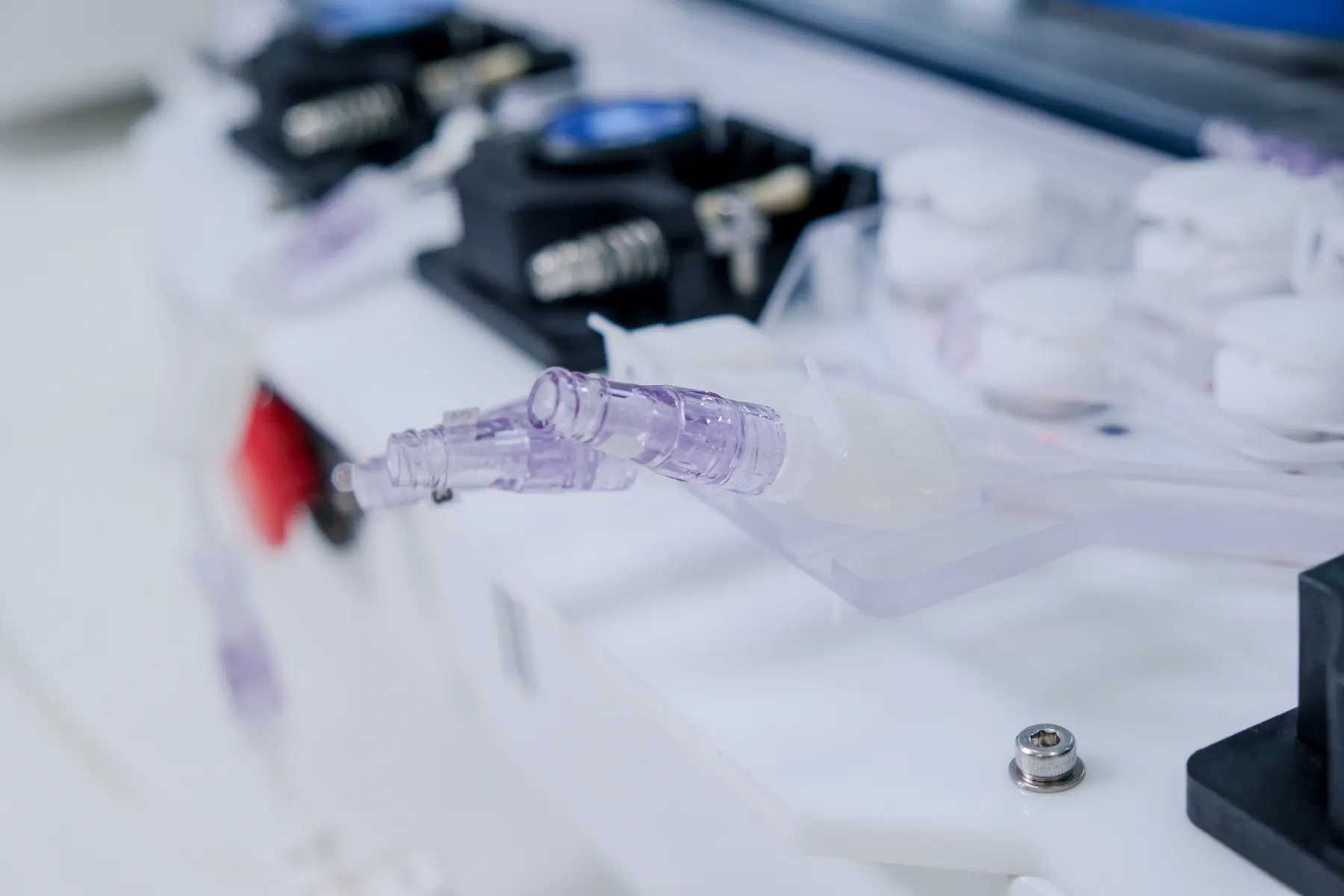
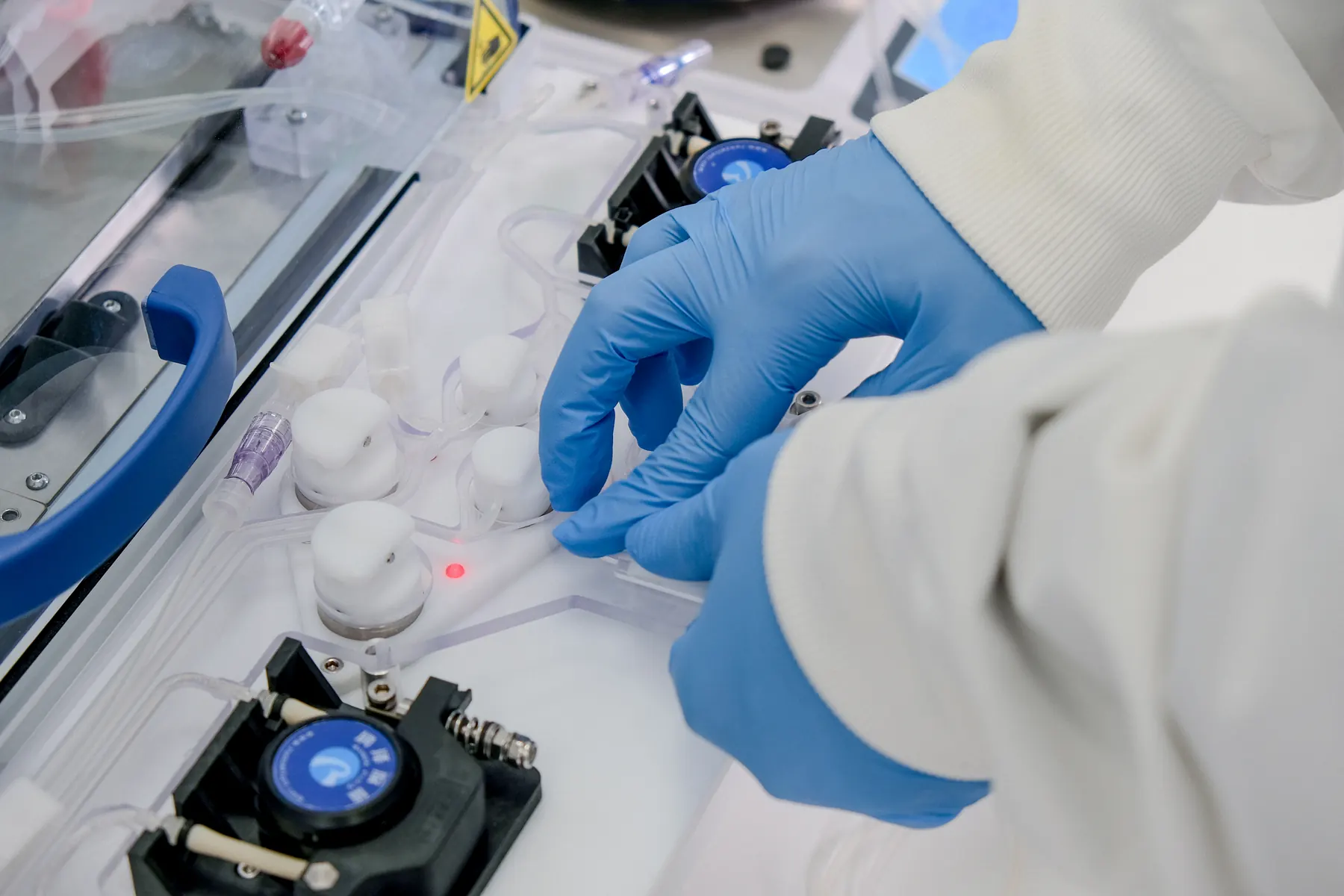
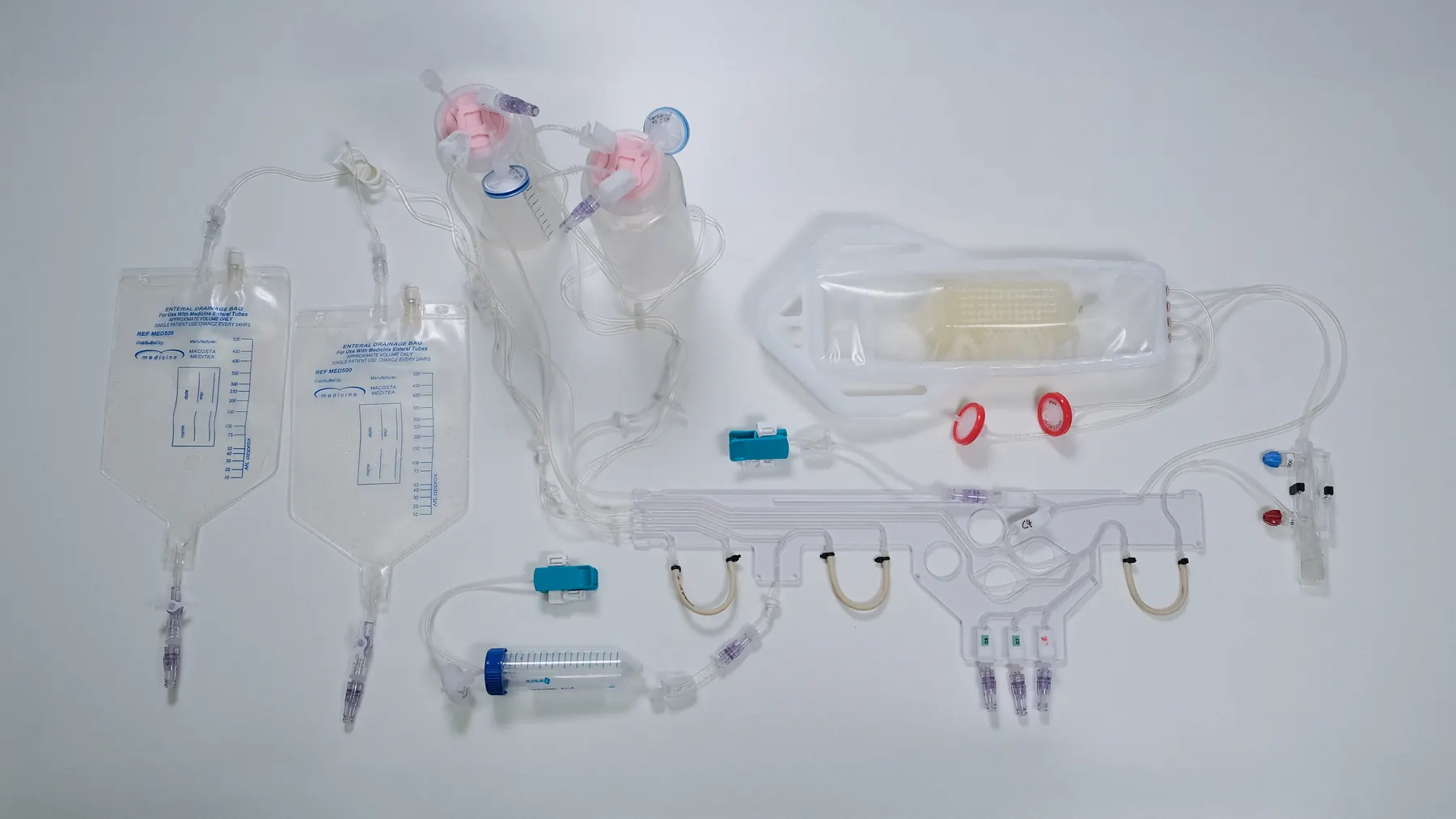
The Bubble-Free Bioreactor (BFB) is the single-use cartridge at the core of each Production Unit. It's a culture vessel built around a network of microchannels, pre-assembled and pre-sterilized in a functionally closed, aseptic consumable, so it ships ready to load with no complex setup and no tools required.
How is this different from a stirred-tank bioreactor?
Stirred tanks mix cells with an impeller, generating turbulent flow and shear stress that limits cell density and consistency, and they run in batches because the tank needs to be stopped and sterilized between runs. The HTB uses laminar (non-turbulent), unidirectional flow through microchannels instead of mechanical agitation: cells move through the system rather than getting mixed and collided. This significantly reduces shear stress on the cells and supports continuous intensified production.
How does it compare to traditional adherent culture (T-flasks, flask stacks)?
Manual flask-based culture means repeated trips to the biosafety cabinet for feeding, passaging, and sampling, with density limited by how many flasks or stacks fit in your incubator. The HTB packs that footprint down and automates the workflow: a 60 mL cartridge offers roughly the surface area of 8 standard T175 flasks, the Formulation Unit handles feeding on its own schedule, and process parameters are logged continuously instead of checked by hand. The single-use cartridge arrives pre-assembled and pre-sterilized, you fasten it into the reusable frame and connect two lines (formulation, inoculation), with no manual media prep or repeated open-system handling per feed.
What's the design inspiration?
The channel network is a gyroid microchannel architecture, inspired by the efficiency of the human vascular system: interconnected channels deliver nutrients and oxygen evenly to every cell, minimizing dead zones and uneven feeding.
Can I run more than one experiment at a time?
Yes, up to three Production Units run in parallel from one Control Unit, each with independent parameters. That means you can compare culture conditions side by side, in the same run, instead of testing them sequentially over separate weeks.
How does media get to the cells?
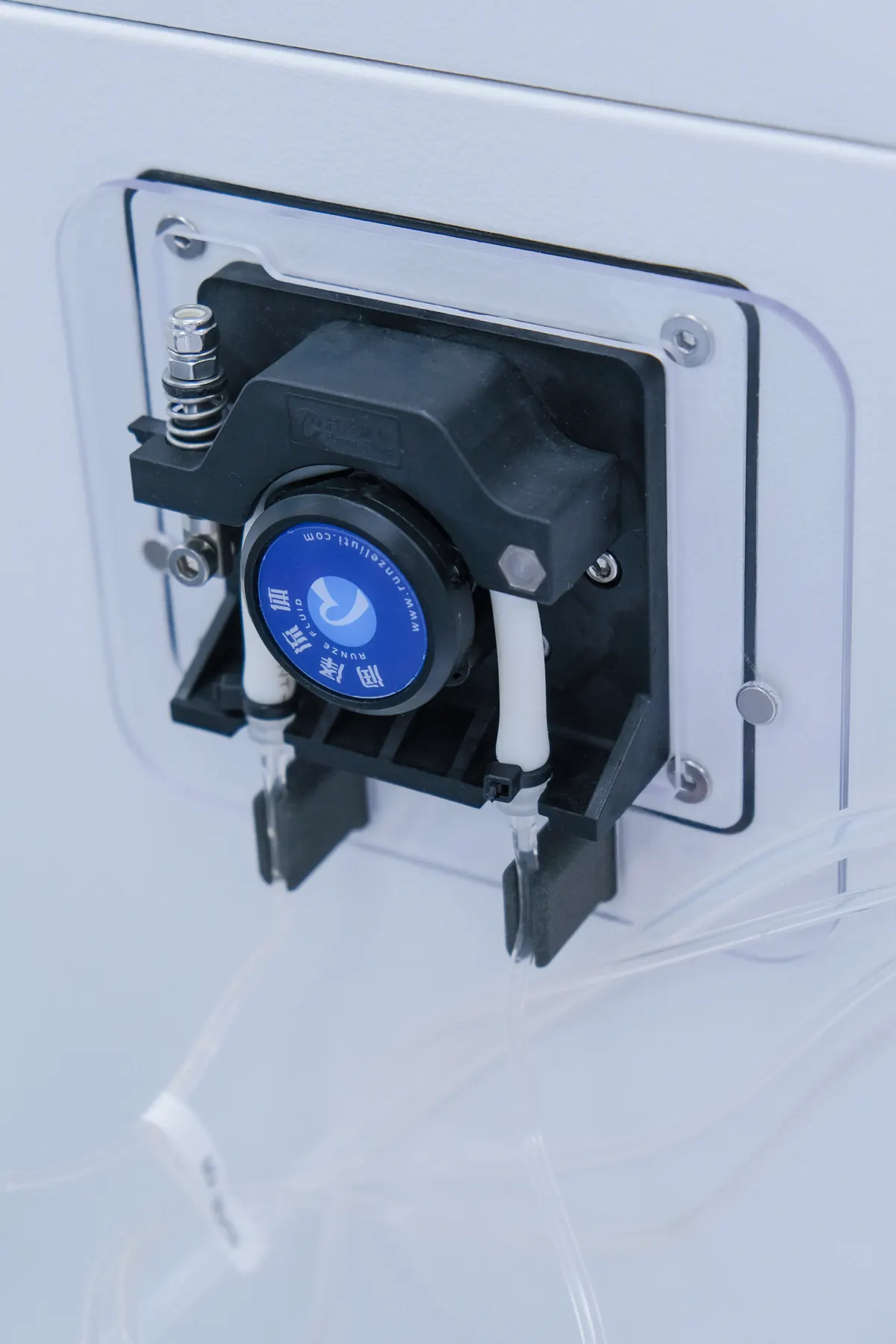
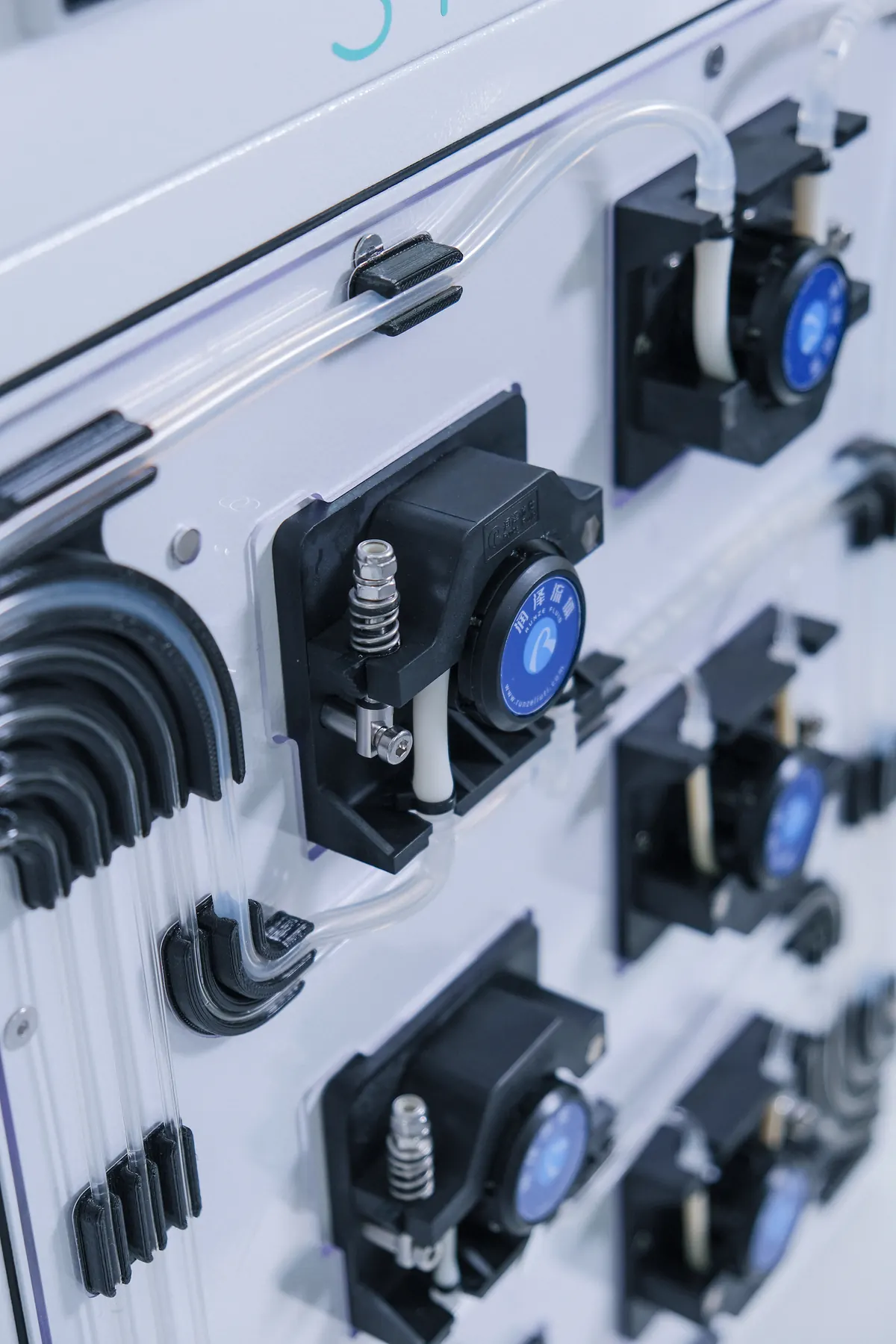
The Formulation Unit prepares and delivers media automatically for the 3 Production Units, with up to 5 different reagents.
Is there data monitoring and traceability?
Yes. All bioreactor data is captured, recorded with full traceability per experiment, and pushed to Stämm's cloud platform, where you can monitor processes in real time and build automated workflows.
How long can a run last?
Up to 90 days continuously.
What process parameters can I control?
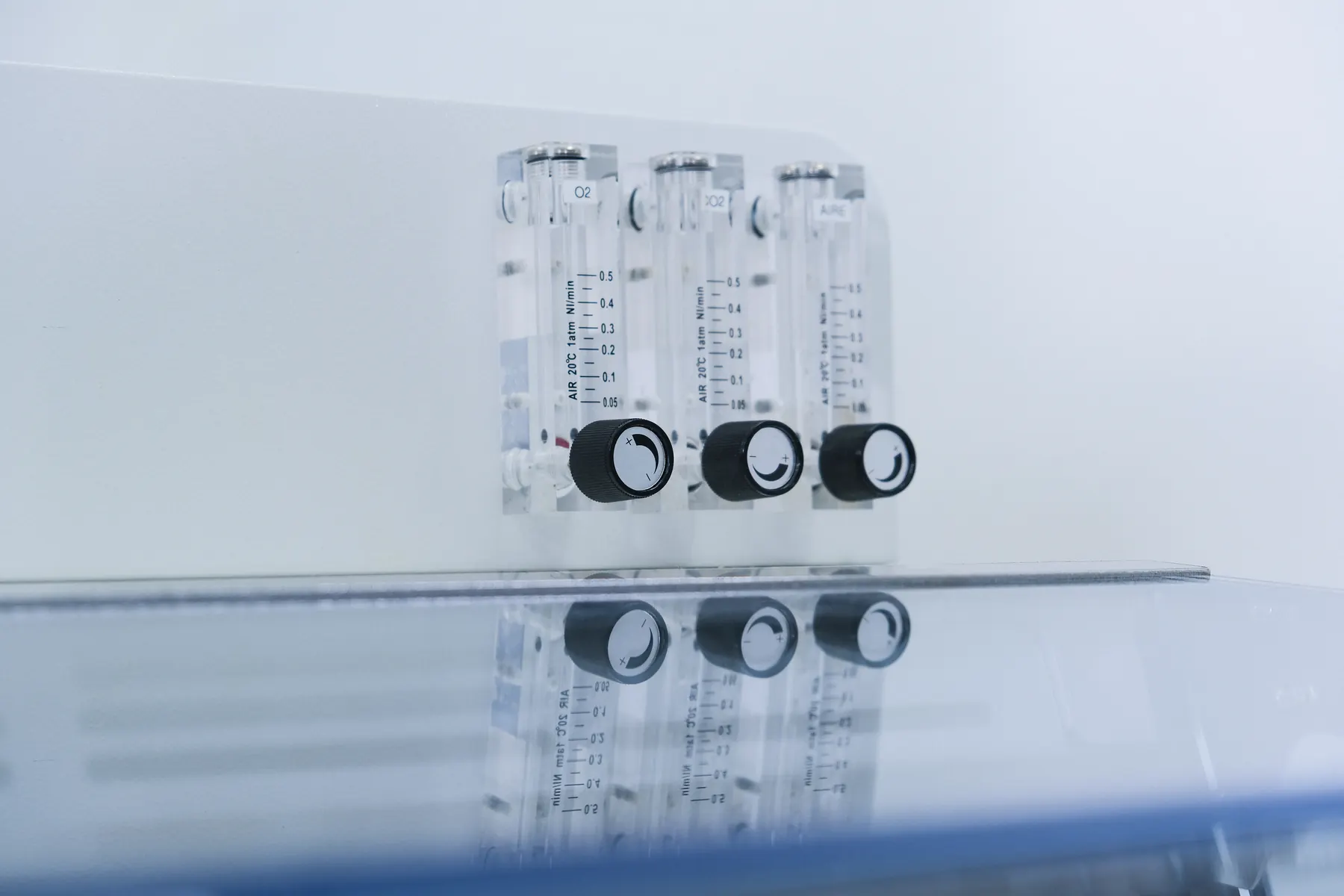
Temperature can be controlled between 25–40°C (±0.5°C), pH between 5.5–8.5, and oxygen up to 100%. Oxygen and CO2 levels in the supplied air give indirect, rapid control over pH and dissolved oxygen. The system monitors these in real time, along with humidity.
Where is Stämm based?
Stämm was founded in 2016 and is headquartered in San Francisco, USA, with additional offices and labs in Buenos Aires, Argentina and Monthey, Switzerland.